
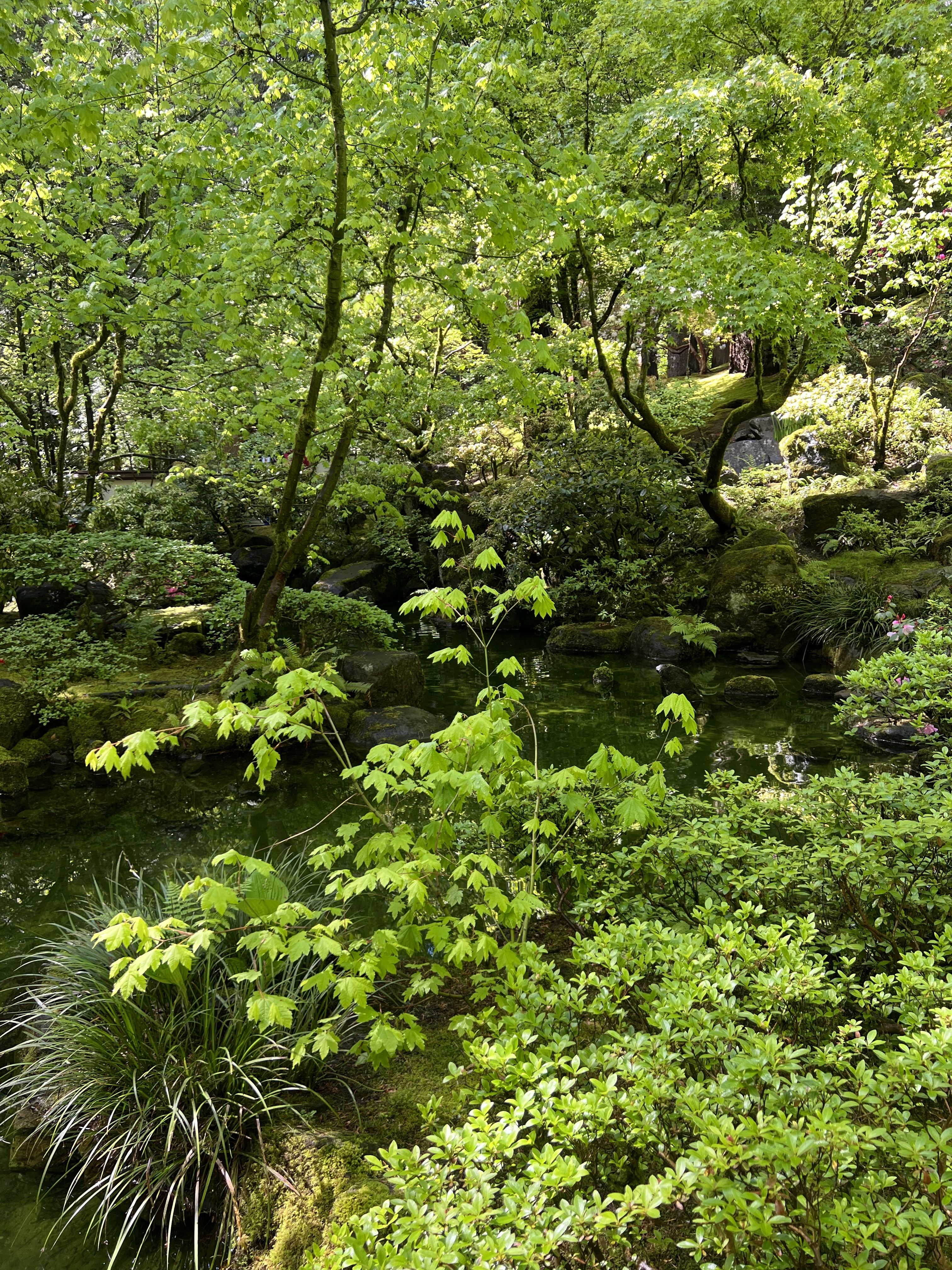
The forest is a healing oasis that once upon a time was a place of solace for indigenous and Black people. The forest does not belong to one specific group because they want to keep its beauties for itself – the same can be said for the oceans, rivers, and springs. In Oregon, there is a plethora of magical nature sightings and all of them belong to all of us. In my adventures and rumblings through this state, I have gained a deeper sense of appreciation for the life that blooms around me. Yet, 97% of the time I have gone to the forest, a sea of yellow and white faces greet me, none of them matching my own. Why is this? There is not one person right now who could go into a pathless wood and be refused by the flora that resides there. Yet, sometimes I even tip-toe uncertainly as I cross new terrain on my hikes, pondering the dangers that lurk. Isn’t that something?

Black people and forests seem to have a complicated relationship. As more research into epigenetics continues to be published, the conversation turns more and more transparent. Lynchings, which were commonplace not even 100 years ago, genetically distorted the view that some black people have with trees. The grotesque acts that were smeared into the collective psyches around African Americans and trees has taken years of de-conditioning, unlearning, and relearning how to be in harmony with the trees that our ancestors knew so well and so intimately.
This is not something I am discussing to highlight travesty, it is simply something I am discussing because more of us need to. Healing the wounds of the past requires discussing them and evaluating the ways in which they affect the present. It’s no secret that many black people do not hike. I don’t think it’s because we don’t want to, I believe it’s simply because there is an unseen fear of the dark of the woods. As more conversations are had around the healing quality of dirt, trees, and the living ecosystem that resides beyond our lawns, I think it is important to include why so many people are adverse to the woods in the first place.
Woods and trees branches have a complicated history in textbooks, but what I do love is that we are moving into a space and time where the reclamation of the forest (for us all) is not only imminent but a necessity. The forest is our first sanctuary, a place where baptisms and christenings have taken place. A place to go to scream and cry and be enveloped by unconditional love. My love for the forest knows no bounds and it’s never failed to surprise me each time I go. I would love a world where more people who looked like me ventured into the unknown that marks these wandering forest trails. I have imagined it, and it looks like a dream come true. Calling others into the forest and her way of shaping and healing us all is a pasttime I thoroughly enjoy. I envision a future that consists of us rewriting our story with tree branches, rewriting what it means to truly collectively heal from the pains and sorrows of the past that spill into our current experiences.
There are seas and mountains and rivers, yes. But the forest is truly special in that it speaks in whispers and sighs. And if we listen closely, we are given all the answers to our questions. The first question being: who does the forest belong to? And it will gently reply, “no one.”
Leave a Reply